
Kilmurry House
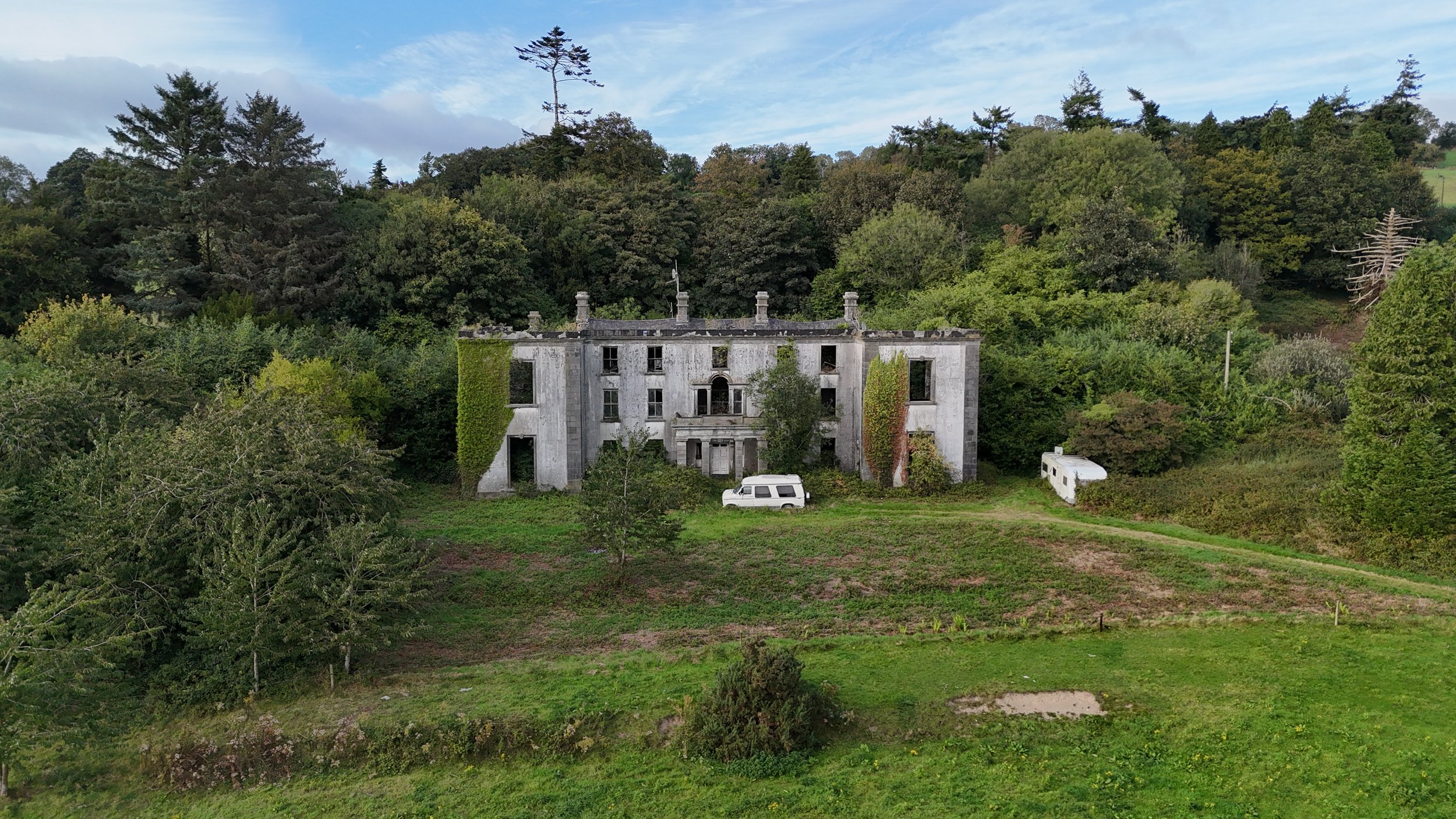
Kilmurry House, 2025
Nestled into a wooded hillside overlooking the River Blackwater, the once-grand Kilmurry House now lies in ruins. It is a fine remaining example of late 18th-century Georgian architecture, and for 250 years it was the home of the Grant family, originally prosperous merchants based in Waterford City.
The lands at Kilmurry were first purchased in the 17th century by Jasper Grant. He passed the estate to his son, also named Jasper, and it was this younger Jasper who is credited with constructing the house as we see it today. Interestingly, Jasper was a cavalryman for King George II. The estate encompassed over a thousand acres of fertile land and provided significant employment for the local community. One of the individuals who worked here was Willy Brennan, one of Ireland’s most renowned highwaymen. His story is told in the ballad Brennan on the Moor. After being caught trying to steal a watch, he became an outlaw, formed a gang, and operated from the Kilworth mountains in Co. Cork. Brennan and his gang roamed through Cork, Tipperary, and Waterford, committing numerous burglaries and highway robberies. His favourite targets included estate rent collectors, and he is also believed to have once robbed the mayor of Cashel. His rifle remained at Kilmurry until the 1940s.
In the early 19th century, the property was valued at £37 and was owned by Thomas St. John Grant. Thomas, educated at Eton and later at Exeter College, Oxford (where he earned his BA), returned to Ireland at the height of the Great Famine. Deeply shocked by the suffering he encountered in the district, he organised a local relief fund and hosted a summer festival on the estate grounds to help boost community morale. In 1858, Thomas was appointed High Sheriff of County Cork, and he later served as Deputy Lieutenant of the county. A strong advocate for education, Thomas built two schools for his tenants at Leddy’s Boreen and Raspberry Hill. In 1861, he replaced them with a much larger two-room national school in Kilmurry, with one side for boys and the other for girls. This school remained in use until its closure in 1967.
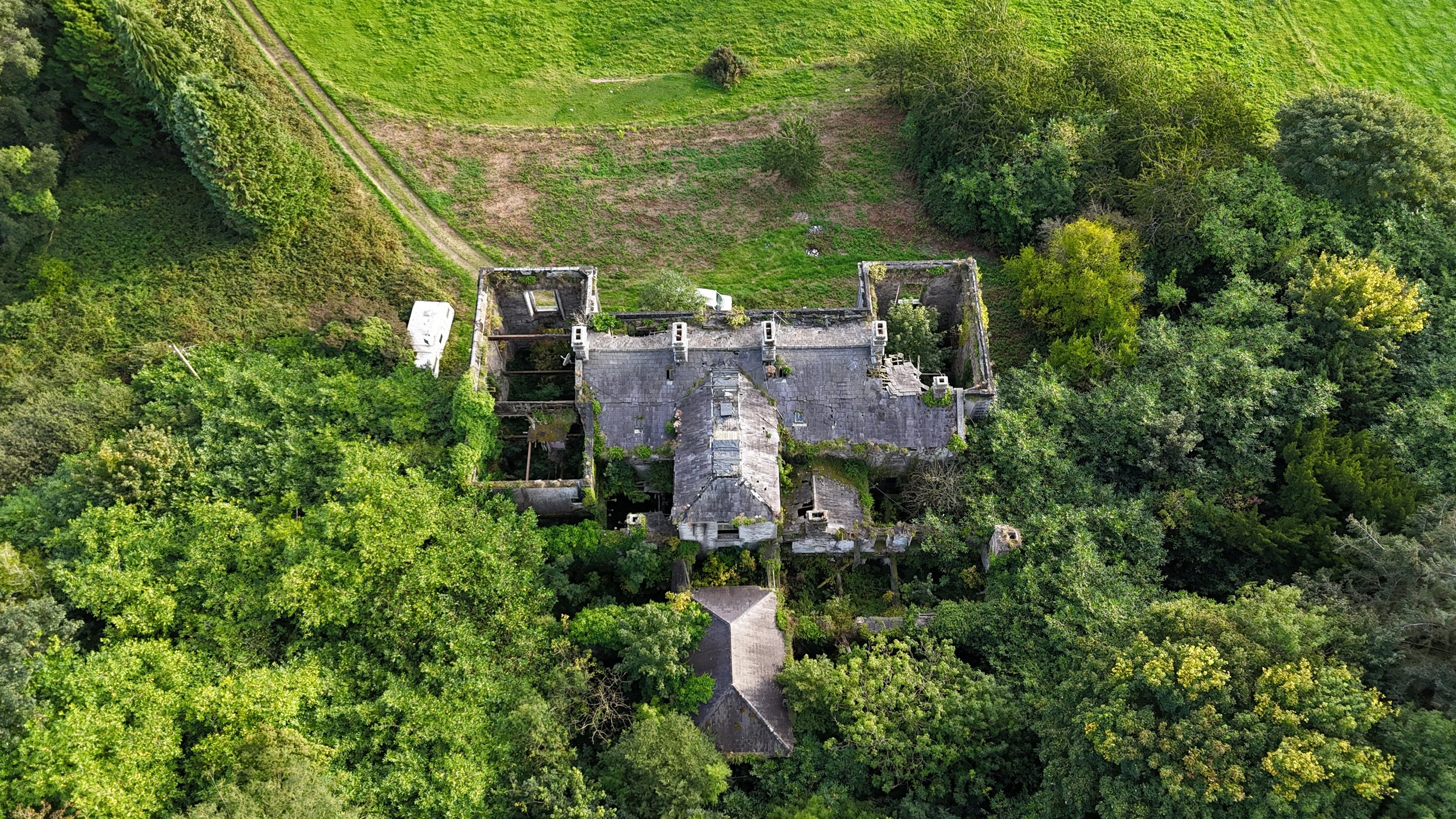
The derelict Kilmurry House, 2025.
In the 1930s, Kilmurry House was sold to the Rosminian Order, who operated it as a seminary, though by the 1940s, the property was reportedly back in Grant family ownership. Its exact date of abandonment remains uncertain, but by the early 21st century, it was recorded as dilapidated. Considering the remaining structure, it was likely left to decline sometime in the 1980s.
Today, Kilmurry House is a striking ruin with spectacular views over the Blackwater. Although silent and weather-beaten, it still bears the memory of centuries of Grant family history, and perhaps, one day, it may live again.
